

Ayurveda has always believed that the body responds best to remedies that work with it, not against it. And this is exactly where essential oils for pain relief, Ayurvedic oils for stress, and aromatherapy for headaches find their place.
From easing migraines to calming the nervous system, certain herbs and oils—like peppermint, lavender, eucalyptus, wintergreen, chamomile and rosemary—have been used for centuries to manage pain, stress, and respiratory congestion.
Today, these traditional solutions are supported by modern research, making essential oils one of the most effective natural alternatives to over-the-counter pain relievers.
Why Essential Oils Work - The Ayurvedic POV
In Ayurveda, pain and stress are often linked to aggravated Vata and Pitta doshas. Essential oils help balance these by -
- Relaxing tense muscles
- Improving circulation
- Cooling inflammation
- Soothing the nervous system
- Clearing blocked channels (srotas)
This combination makes them powerful allies for headaches, migraines, sinus congestion, mental fatigue, and stress-induced tension.
1. Essential Oils for Pain Relief
Certain essential oils act as natural analgesics and anti-inflammatory agents, making them highly effective for headaches, neck strain, muscle pain, and migraine episodes.
Key Ayurvedic Oils for Pain
- Peppermint – Contains menthol, known to cool inflammation and relax tight muscles.
- Lavender – Reduces pain intensity and supports relaxation.
- Wintergreen – Rich in methyl salicylate (nature’s aspirin).
- Rosemary – Improves blood flow and reduces pressure-related pain.
- Chamomile – Calms nerves and reduces stress-related headaches.
Modern Ayurvedic Application - Roll-Ons
Instead of messy balms, modern roll-ons deliver targeted action.
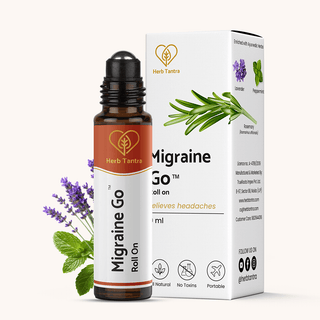
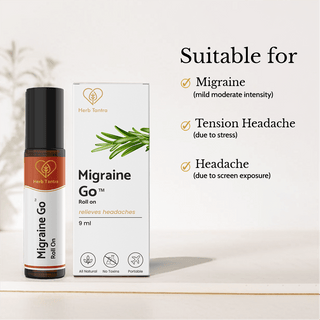
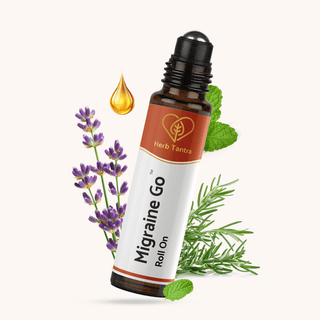
Herb Tantra’s Migraine Go Roll On uses lavender, peppermint, and rosemary to offer quick headache relief without drowsiness, and can be applied on the forehead and temples.
For deeper, more intense pain, the Migraine Go X Roll On uses wintergreen, chamomile, and eucalyptus, offering strong natural relief for severe migraines while staying gentle on the skin.
2. Essential Oils for Stress & Mental Fatigue
Daily stress exhausts the nervous system, triggering headaches, sleep issues, irritability, and tension.
Ayurveda recommends calming oils that help ground Vata and cool Pitta -
Best Essential Oils for Stress Relief
- Lavender – Reduces cortisol levels.
- Chamomile – Encourages deep relaxation.
- Rosemary – Helps mental clarity and focus.
- Eucalyptus – Opens respiratory pathways, reducing stress-induced breathlessness.
Methods of Use -
- Temple application using roll-ons
- Steam inhalation with calming oils
- Diffusion during work to improve concentration
- Warm compress massage for tense muscles
Using blends instead of single oils is shown to improve efficacy — especially when relieving stress-induced headaches.
3. Essential Oils for Respiratory Support
Many Ayurvedic oils double as decongestants, helping with sinus pressure, blocked noses, and seasonal fatigue.
Common Oils Used in Ayurveda
- Eucalyptus – Clears nasal passages.
- Peppermint – Reduces swelling in the airways.
- Rosemary – Helps ease breathing.
-
Camphor – Traditionally used for cold relief.
Herb Tantra’s No Congest Roll On is one of the best essential oils for sinus congestion and an excellent example of a blend that supports respiratory relief.
4. How to Use Essential Oils Safely & Effectively
Topical Roll-Ons
Best for -
- Headaches
- Migraines
- Neck and shoulder tension
- Stress episodes
Why they work so well -
They reach pressure points quickly and offer targeted relief without side effects like drowsiness.
Steam Inhalation
Ideal for -
- Sinus congestion
- Stuffy nose
- Headache due to blocked airways
Diffusion
Great for -
- Daily stress relief
- Better sleep
- Focus during work
- Emotional balance
On-the-Go Relief
Tools like the Migraine Go Headache Relief Gel Cap offer 180-degree hot and cold therapy, allowing users to relieve migraines with heat or reduce inflammation with cold—completely drug-free.
Oil Profiles - Ayurvedic Essentials You Should Know
1. Peppermint Oil
Cooling, anti-inflammatory, reduces pain intensity.
2. Lavender Oil
Balances the mind, reduces stress hormones, supports sleep.
3. Rosemary Oil
Improves circulation, eases muscle tension, boosts mental alertness.
4. Eucalyptus Oil
Decongestant, anti-inflammatory, clears blocked nasal passages.
5. Wintergreen Oil
Powerful natural analgesic; ideal for severe migraines.
6. Chamomile Oil
Deeply relaxing; helps relieve emotional and physical tension.
Where Essential Oils Fit in Ayurvedic Pain Management
Ayurveda suggests using essential oils as part of a holistic approach -
- Apply roll-ons at the onset of a headache
- Use steam inhalation during sinus congestion
- Diffuse calming oils at night
- Use hot/cold therapy during severe migraine episodes
This multi-method approach prevents headaches from escalating and supports long-term stress balance.
FAQs
1. Which essential oils are best for headache and migraine relief?
Peppermint, lavender, rosemary, eucalyptus, chamomile, and wintergreen are some of the best essential oils for pain relief and migraine management due to their cooling and anti-inflammatory properties.
2. How does Ayurveda use essential oils for stress and anxiety?
Ayurveda uses calming oils like lavender, chamomile, and rosemary to balance the nervous system, reduce cortisol, and calm Vata-related stress.
3. Can essential oils replace over-the-counter pain medications?
While essential oils provide effective natural relief and fewer side effects, they are best used as complementary remedies or as natural alternatives for mild to moderate headaches.
4. How do essential oil roll-ons work for headaches?
Roll-ons deliver essential oils directly to pressure points on the forehead and temples, offering fast and targeted relief without greasiness or drowsiness.
5. What is the safest way to use essential oils daily?
Diluted roll-ons, diffusion, and steam inhalation are the safest daily-use methods. Avoid applying undiluted essential oils directly on the skin.