

Essential oils have moved far beyond aromatherapy trends. Today, they are backed by growing scientific research and are widely used in herbal roll-ons for pain relief, stress management, headaches, and respiratory support. But how do these oils actually work once applied to the skin?
In this article, we break down the science of essential oils, explain how herbal roll-ons work, and explore why these compact formulations are an effective and convenient wellness solution.
Understanding Essential Oils: A Scientific Overview
Essential oils are highly concentrated plant extracts obtained from flowers, leaves, bark, roots, and seeds. They contain volatile aromatic compounds responsible for the plant’s therapeutic properties.
How Essential Oils Are Extracted
The method of extraction directly impacts the oil’s effectiveness:
-
Steam Distillation – Preserves volatile compounds (most common)
-
Cold Pressing – Used mainly for citrus peels
-
CO₂ Extraction – Produces highly pure, potent oils
These processes ensure that the active compounds—such as terpenes, phenols, and esters—remain intact.
The Science of Essential Oils in Herbal Roll-Ons
Herbal roll-ons combine essential oils with carrier oils in a format designed for targeted topical application. The science behind their effectiveness lies in three core mechanisms:
1. Skin Absorption and Transdermal Action
Essential oils have low molecular weight, allowing them to penetrate the skin barrier quickly. Once absorbed:
-
Active compounds interact with local tissues
-
Some enter the bloodstream in trace amounts
-
Effects begin within minutes of application
Carrier oils help slow evaporation and improve absorption.
2. Neurological Response Through Aromatherapy
When essential oils evaporate from the skin, their aroma is inhaled and interacts with the olfactory system, which connects directly to the brain’s limbic system.
This influences:
-
Mood and emotional balance
-
Stress and anxiety levels
-
Pain perception and relaxation response
This dual action—topical + aromatic—is why roll-ons are especially effective.
3. Anti-Inflammatory and Analgesic Properties
Scientific studies show that many essential oils contain compounds that:
-
Reduce inflammation
-
Relax muscles
-
Improve circulation
-
Inhibit pain signals
This makes them ideal for headaches, joint pain, menstrual cramps, and muscle tension.
Why Herbal Roll-Ons Are More Effective Than Single Oils
Herbal roll-ons use synergistic blends, meaning multiple oils work together to enhance each other’s effects.
Benefits of Blended Essential Oils:
-
Faster relief
-
Broader therapeutic impact
-
Balanced potency
-
Reduced risk of skin irritation
This approach is rooted in both Ayurvedic principles and modern pharmacology.
How Herbal Roll-Ons Work for Common Conditions
1. Pain & Headache Relief
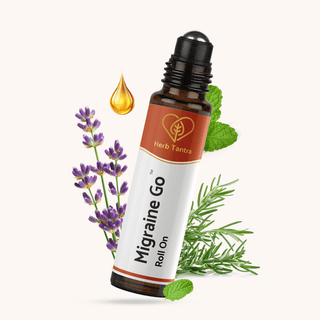
Essential oils like peppermint, eucalyptus, and lavender:
-
Increase blood flow
-
Relax tense muscles
-
Reduce nerve sensitivity
Applied to temples, neck, or pressure points, roll-ons offer fast, non-drowsy relief.
Peppermint Essential Oil
Best for: Headaches, migraines, cooling relief
Peppermint oil delivers an instant cooling effect that soothes headaches and calms nerve sensitivity. It is especially helpful for stress-induced headaches and migraine discomfort.
Why it’s effective:
Menthol in peppermint helps relax tense muscles and improves blood circulation, offering fast, natural relief without harsh chemicals.
2. Stress and Anxiety Management
Calming oils stimulate the parasympathetic nervous system, helping the body shift from “fight or flight” to relaxation mode.
Benefits include:
-
Reduced cortisol levels
-
Improved emotional balance
-
Better sleep quality
Rosemary Essential Oil
Best for: Muscle pain, focus, mental clarity
Rosemary essential oil is valued for its analgesic and circulation-boosting properties. It helps ease muscle stiffness, joint discomfort, and tension caused by long working hours or stress.
Ayurvedic insight:
Traditionally used to balance Vata dosha, rosemary supports better blood flow and helps reduce pain caused by dryness and stiffness in the body.
3. Respiratory and Decongestant Support
Decongestant oils open airways and reduce inflammation, making breathing easier during colds or seasonal discomfort.
Eucalyptus Essential Oil
Best for: Congestion, headaches, respiratory relief
Eucalyptus oil is widely known for its powerful decongestant properties. It helps clear blocked sinuses, eases breathing, and provides a cooling sensation that can reduce head pressure and tension. In herbal roll-ons, eucalyptus supports quick relief from sinus headaches and seasonal congestion.
How it works:
Its active compound, eucalyptol, helps open airways and reduce inflammation, making it effective for both respiratory discomfort and mental fatigue.
Supporting Essential Oils in the Blend
These oils work synergistically to enhance the overall effectiveness of the formulation:
Lavender Essential Oil
Known for its calming and stress-relieving properties, lavender helps relax the nervous system, improve sleep quality, and reduce anxiety-related pain.
Lemongrass Essential Oil
Lemongrass has natural anti-inflammatory and pain-relieving benefits. It supports muscle relaxation and adds a refreshing aroma that uplifts mood and reduces fatigue.
Tea Tree Essential Oil
Tea tree oil offers antimicrobial and anti-inflammatory support. It helps keep the formulation skin-friendly while supporting overall healing and recovery.
The Role of Carrier Oils in Roll-On Effectiveness
Carrier oils are not just fillers. They:
-
Improve skin absorption
-
Prevent irritation from concentrated oils
-
Provide nourishing benefits to the skin
High-quality roll-ons use light, non-greasy carrier oils to ensure comfort and effectiveness.
Scientific Support for Essential Oils
Modern research supports what traditional medicine has known for centuries:
-
Essential oils can modulate pain receptors
-
Aromatic compounds affect brain chemistry
-
Topical application provides localised relief without systemic side effects
This bridges ancient herbal wisdom with contemporary science.
Why Herbal Roll-Ons Are a Smart Wellness Choice
Compared to over-the-counter pain relief products, herbal roll-ons:
-
Are non-invasive
-
Have fewer side effects
-
Are easy to use anytime, anywhere
-
Support long-term wellness instead of temporary suppression
They are especially effective for people seeking natural pain relief, stress management, and holistic wellness solutions.
Real-World Usage: What Users Experience
Users often report:
-
Faster relief from tension headaches
-
Reduced stress within minutes
-
Improved sleep routines
-
Less reliance on synthetic pain relievers
Consistency plays a key role—regular use enhances benefits over time.
The effectiveness of herbal roll-ons is not just anecdotal—it is grounded in chemistry, neuroscience, and plant science. By combining potent essential oils, thoughtful formulation, and targeted application, roll-ons offer a practical and science-backed approach to everyday wellness.
As interest in natural health solutions continues to grow, understanding how essential oils work empowers consumers to make informed, mindful choices.